
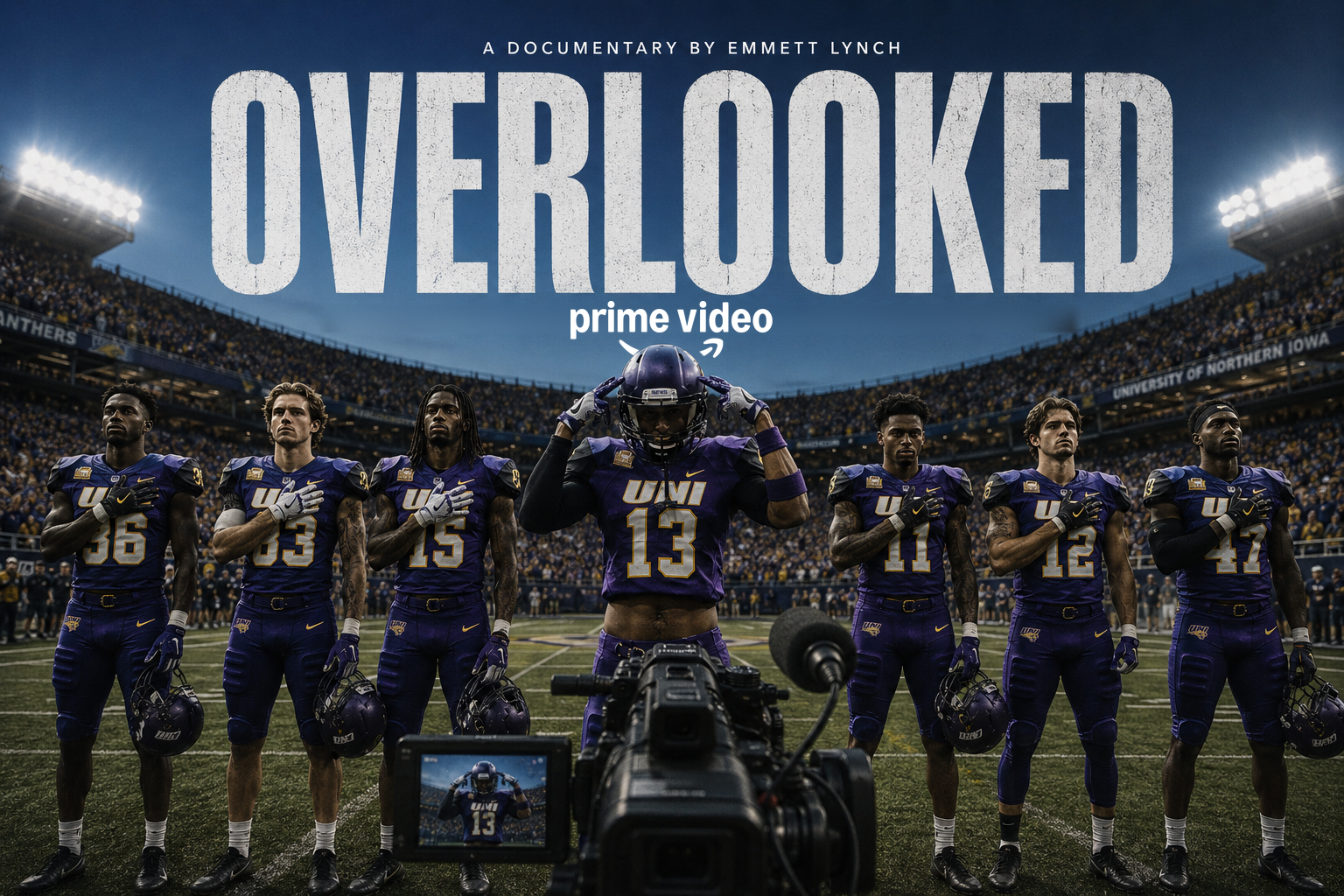
Directed & Produced by Emmett Lynch
An Echelon Production

Los Angeles, California - 49 MINS - ENGLISH
emmett@overlooked.co
+1 773-715-1980
TAGLINE
ARE YOU EVER GONNA GET OFF THE BENCH?
SYNOPSIS
A gifted walk-on secretly films his fight to earn a Division 1 college scholarship.
When an overbearing coach sidelines him, he films his own experience to expose the mental health crisis facing football players.
EXPANDED SYNOPSIS
Emmett Lynch grew up in the South Side of Chicago where the narrative to make it out of his neighborhood was gang activity or scoring a basketball scholarship. But he wanted to aim higher and forge his own path.
He pursued his dreams of a college football scholarship instead. In this autobiographical account, Emmett documents his journey to earn a scholarship to play football at a major Division 1 (D1) ranked university.
Seduced by the rise of NFL legends, gifted college football player, Emmett Lynch begins to self-document his football career. When he falls under the thumb of a power hungry coach, he watches his dreams disappear. He is then traumatized by mental illness and depression experienced by many hopefuls which he successfully overcomes to build a new career and helps to empower other athletes to manage their mental health challenges.
PRIME TRAILER
DIRECTOR’S TRAILER
ABOUT DIRECTOR, EMMETT LYNCH
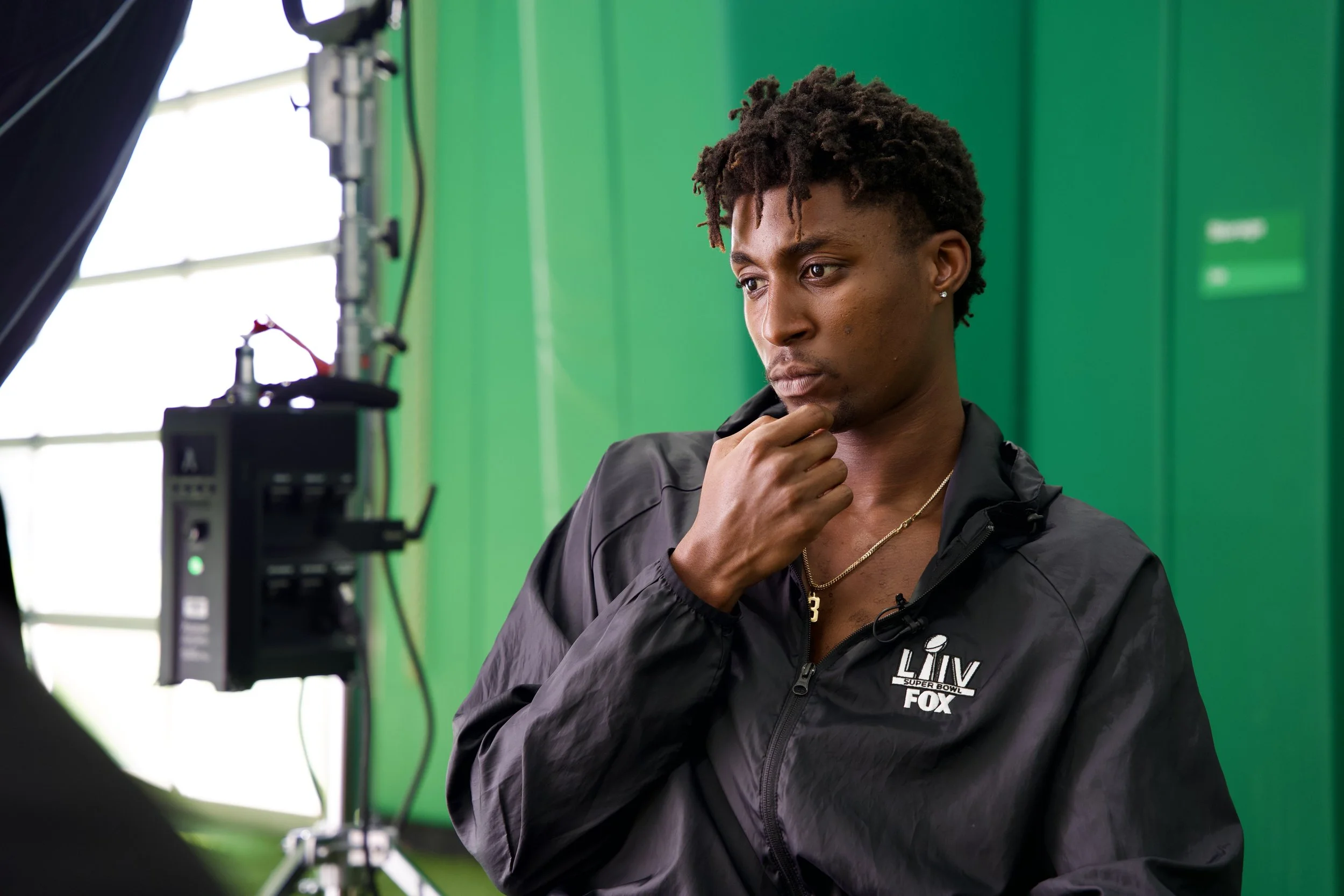
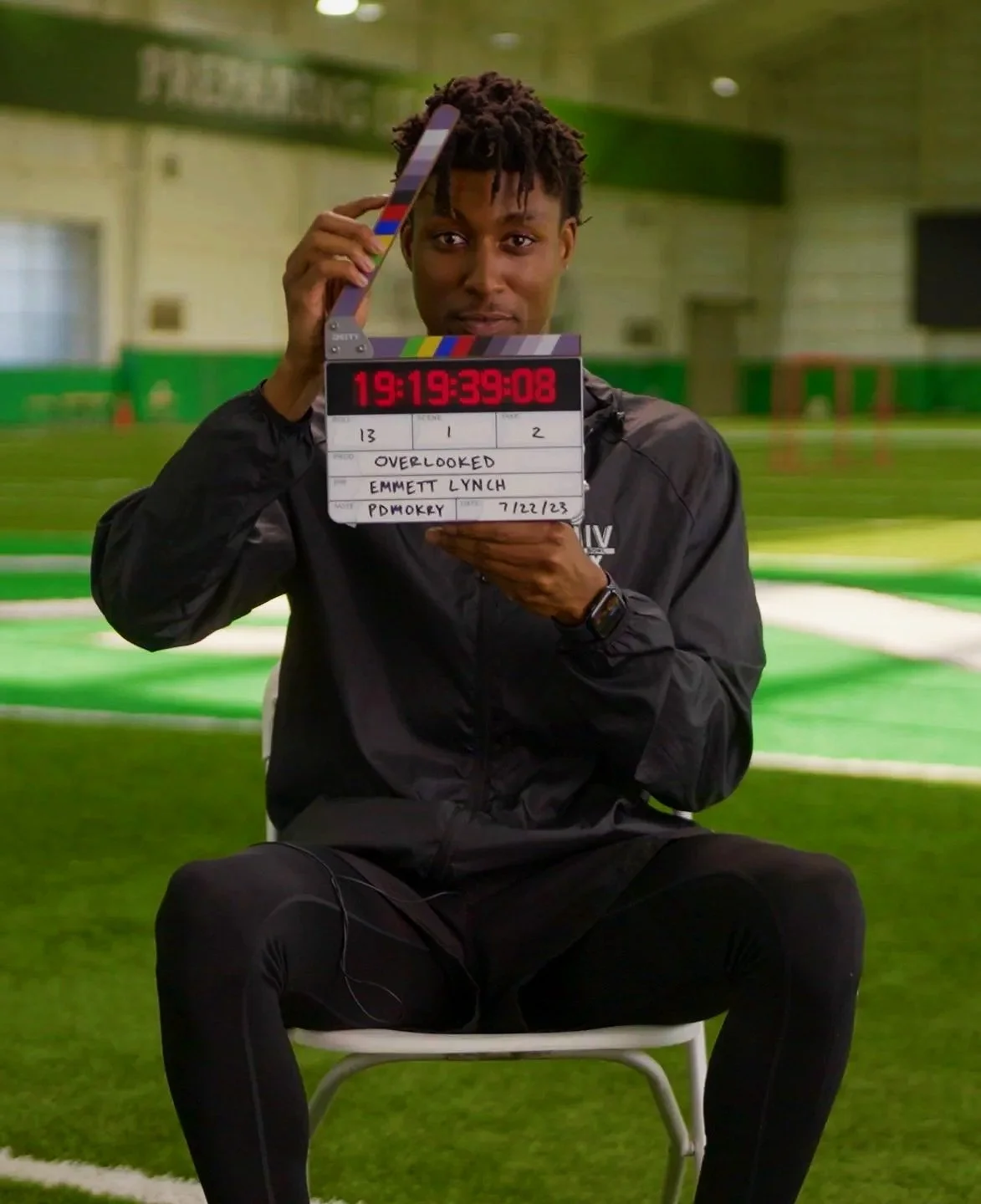
Emmett Lynch is a Chicago native and former athlete. His love for storytelling began in high school and transcended through his time as a student-athlete at Northern Illinois University and Northern Iowa where he documented his football career.
While most sports documentaries celebrate victory, Emmett explores what happens when football hopefuls are denied the chance to reach their full potential. He highlights the emotional, mental health and physical health challenges of these football hopefuls and creates a platform for awareness, dialogue and healing while supporting future athletes to overcome these challenges.
Although the decision of his former coach affected him deeply and caused him to deal with various mental health issues; he was able to successfully overcome these challenges to use this experience as a launchpad for his career.
After earning a degree in Digital Media Journalism, he took on roles at the Creative Artists Agency and FOX Sports Films as a creative producer for sports documentaries. Emmett is now focused on sharing the stories of the trials & tribulations of athletes around the world.
Lynch is certified in Mental Health First Aid by the U.S. Center in Mental Health and Sport and partners with brands, non-profits and other institutions to empower athletes with knowledge and resources through the “Overlooked Sports Program” which he founded himself.
CAST
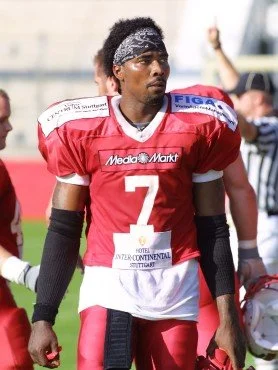
QUINCY WOODS was the top dual-threat ranked recruit in the country during the mid-1990’s who signed with the USC Trojans. Woods spent several seasons in a crowded quarterback room during a transitional era for the Trojans. He chose USC over powerhouse programs including Notre Dame, Nebraska, and Florida State. Eventually faced with a position switch, transferring or a heated depth chart battle with future NFL quarterback, Carson Palmer. His football legacy continued through his son, also named Quincy Woods, who became an all-state wide receiver and college football player at University Minnesota Duluth.
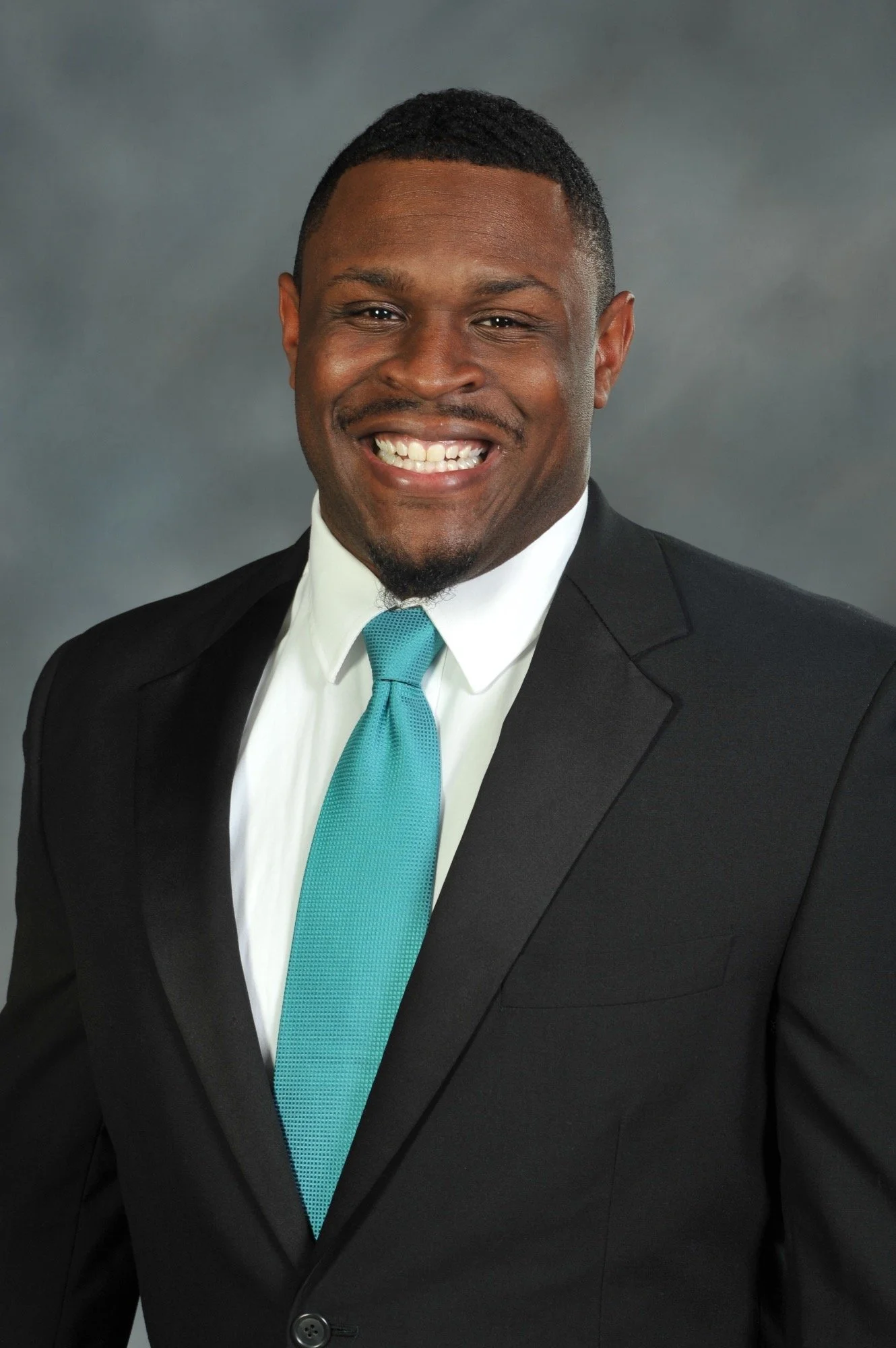
KEELON BROOKINS is a St. Paul native and former defensive back at Wisconsin and the University of Northern Iowa. Brookins was the secondary coach at Coastal Carolina during the 2025 Campaign. Before Coastal Carolina, Brookins spent 2024 at LA Tech, coaching the corners. Keelon Brookins now coaches the secondary at UTEP. In Overlooked, Brookins lends authenticity to this documentary as he speaks candidly about his own personal experience rising through the football echelons and the grave toll on his personal mental health and on those of the team members he coached. Brookins graduated from Wisconsin in 2016 with a degree in education before obtaining his master’s degree in Leisure, Youth, and Human Services from Northern Iowa in 2022. A native of St. Paul, Minn., he is married to his wife, Olivia Arkell-Brookins, and has a son, Hendrix, and a daughter, Harlee.
PRESS REVIEWS
DAYTIME CHICAGO TV INTERVIEW
CLIP 1
CLIP 2
CLIP 3
TECHNICAL SPECIFICATIONS
Film Type: Documentary
Runtime: 49 Minutes
Country of Origin: United States
Country of Filming: United States
Shooting format: DCP (Digital Cinema Package)
Aspect Ratio: Flat (1.85:1)
Audio Format: 5.1
Original Language Film: English
Written, Produced and Directed by
Emmett Lynch
Associate Producer
Chadwick Gobar
Director of Photography
Devon Mettlin
CREDITS
Featuring
Quincy Woods
Featuring
Keelon Brookins
Original Score
Thulani Kachingwe
LINKS
Overlooked Documentary Press Kit
Youtube
https://www.youtube.com/watch?v=eg4I5I8z0nI
https://www.instagram.com/emmettlynch13/
TikTok
https://www.tiktok.com/tag/overlookedszn
Keelon Brookins
Quincy Woods
https://www.chicagotribune.com/1995/01/27/rich-east-qb-woods-headed-for-usc-after-heavy-recruiting/
Mental Health & Suicide among College Football players
https://hsph.harvard.edu/news/study-shows-rise-in-suicide-rate-among-nfl-players/
FAQs
What inspired you to make this documentary?
The triumphs, self-discovery and drama in my own personal journey to realize my dreams of a Division 1 Football scholarship and to eventually become an NFL player. It ended up being a long crazy ride of disappointment & heartbreak when all my hopes were crushed and years of sacrifice & hard work now seemed to be for nothing. I was left with no direction on where to go or what to do next with my life. But as I shared my experience, I met others dealing with the same issues who also wanted to get involved and tell their story as well. Eventually I realized that these issues were endemic to college football, so I decided to create this documentary as a message of hope and survival to encourage others.
Was there a particular moment you recall when you realized you need to tell this story?
It was when I was at University of Northern Iowa and the Head Coach said to me “You guys think you know where this is all going. It ain’t going anywhere except where I want it to go whether I’m right or wrong” This was literally his response when I questioned him if I ever had any control over my future since I joined his team. So it was clear that I never even had a shot with this Coach to begin with since he had arbitrarily decided to label me as a non-starter. It became apparent to me that I was not the first person to be a victim of this system and that I was certainly not going to be the last. So since my football career was never going to take off, I was definitely relieved that I had maintained my Digital Media Studies degree and I that I had taught myself to edit, direct & shoot video so I was able create this documentary to shine light on every story like mine which is often never told.
What do you hope that “Overlooked” will achieve? I
I really want this documentary to create awareness of all those dreaming of a college football scholarship who never make it despite putting in countless hours of training, work and endless sacrifice. I want to illuminate the resulting trauma they suffer when they feel their life no longer has any direction and that they are failures, resulting from mental illness and physical injuries which some are never able to overcome.
What can colleges do to counsel these athletic hopefuls who experience physical & mental challenges?
It is critical that colleges are aware of both the high mental health and physical injury rates amongst NCAA athletes and establish support teams to deal with these issues. These teams should be inclusive of social workers, psychologists, nurses and counselors who all value speaking openly about mental health among college athletes. Approximately a 1/3 of college athletes experience depression or anxiety, while among NCAA athletes, male football players have been found to be at the highest risk of death by suicide, with elite Division I players at greatest risk. However, colleges should also ensure these athletic hopefuls have a realistic back-up plan and maintain their studies while in training, so if their football dreams are suddenly shattered they can take comfort in knowing they have other options.
What are the warning signs colleges, teammates, friends and family should look out for to determine if a college football player is at risk of mental illness or suicide?
The key warning signs are when a young man is far from home and family, struggling to maintain academic eligibility and starts to experience a steady isolation from his teammates, friends and family and his entire self worth is wrapped up in his athletic achievements. If you or anyone you know needs help or is at risk of harming themselves in the US call the National Suicide Prevention Hotline at 988 24 hours a day, 7days a week via call, text or online chat. Help is only 3 digits away. https://www.988california.org/
What do you think is driving the corruption and politics behind which players are put on the field?
Often it is just the fact that most of the coaches and Head Coaches of these college programs are White and the majority of these football hopefuls are Black. The coaches at these sometimes predominantly all white colleges yield absolute power over their teams with no check or balance system on who gets to play on the field by College Administration. Because these coaches wield unchecked authority and control over the team, this typically leads to tyranny, corruption, or severe behavioral changes. It has often been noted that Individuals with power often display behaviors similar to those with brain trauma, such as increased impulsivity, rudeness, and a reduced capacity for empathy. Since a lack of accountability of these coaches is being enforced by colleges it enables even the best individuals prone to becoming bad actors who become guilty of abuse.
How long did it take you to make this film?
The journey to making this documentary is literally its own documentary! It’s taken me about 13 years total. I decided to create this film when I felt the most hopeless and emptiest inside when my football career ended in 2017. I initially planned to making this documentary solely about my story and release it in the following year. However, when I started learning more about the prevalence of epidemic it kept leading to more interviews, research and years of filming which kept extending the production and release date.
How much footage did you take for this film and how much was actually used?
I probably have hundreds and hundreds of hours worth of footage! I traveled and interviewed numerous former athletes and mental health professionals before I actually started editing anything at all. I have recorded everything from my travels, meeting players’ families and even spending a day with these prospective athletes at their actual jobs outside of the sports arena. I really wanted to showcase their full potential as individuals and highlight it is not only rooted in their athletic abilities. I have now enough footage for an entire docuseries and more.
Do you believe there is a racial element & bias endemic in the management and treatment of athletic hopefuls at colleges?
A quick look at the facts really establishes this on its own. Approximately 10% of high school student-athletes who register their intent to play football with the NCAA are Black. That number is as high as 50% of players on Division I Football Bowl Subdivision (FBS) teams. Often, these young black men are attending colleges with an overwhelmingly white student population, far from home and community support, making them susceptible to social isolation, loneliness, depression and anxiety. Few have received any kind of mentoring on how to handle the pressure and expectations placed on an eighteen-year-old entering the world of college football or being told that it is okay to ask for help. These schools recruit a lot of African-American athletes who were big, fast and strong, but since none of the coaches looked like them there was no one who they could talk to about what was going on at home or what was going on internally and it was way too taboo to talk about mental health. It is understandable, but sad that there is a lot of stigma and shame amongst these big, strong, virile, proud black athletes to speak about being vulnerable victims who are essentially being exploited for their bodies. Unfortunately, College Football is systematically, methodically and consistently engaged in this form of social injustice against these emotionally and physically vulnerable athletes.